
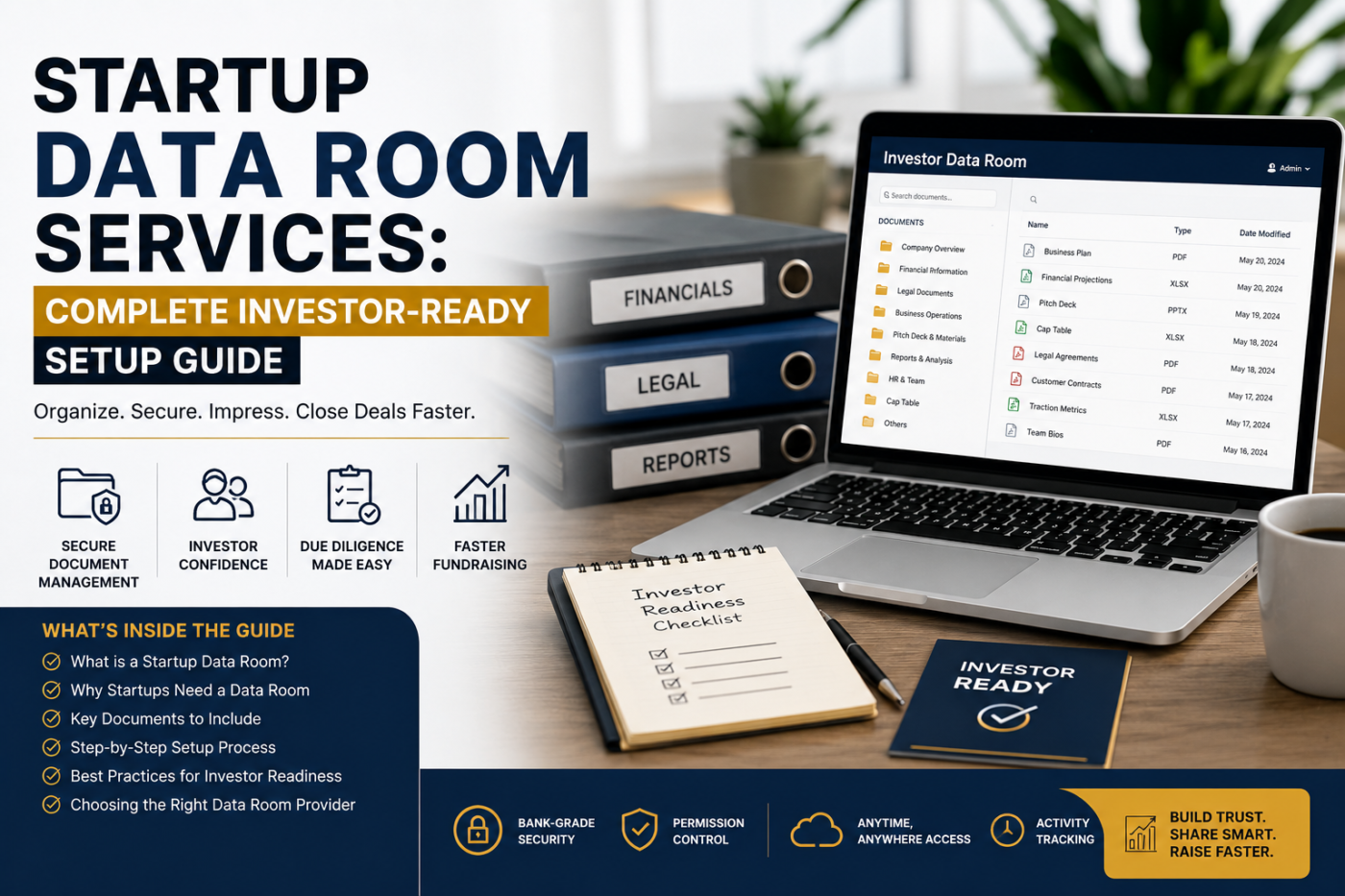
What Are Startup Data Room Services?
Startup data room services help founders organize, secure, and manage all critical business documents required during fundraising and investor due diligence.
A professional virtual data room for startups allows investors to access:
- financial records,
- legal agreements,
- compliance documents,
- fundraising materials,
- business metrics,
- and operational reports
through one secure platform.
As fundraising becomes more competitive, startups that maintain an organized investor data room setup gain a significant advantage in investor confidence and fundraising speed.
Why Startups Need a Virtual Data Room
Investors today expect startups to be investor-ready from day one.
Without proper startup fundraising documentation, the fundraising process becomes slow, unstructured, and stressful.
A structured startup fundraising data room helps founders:
- simplify due diligence,
- improve transparency,
- reduce investor back-and-forth,
- accelerate funding decisions,
- and showcase operational maturity.
A clean and organized data room signals professionalism and preparedness to investors.
Benefits of Startup Data Room Services
Faster Due Diligence
Investors can instantly access required documents without repeated email requests.
This improves:
- investor communication,
- review timelines,
- and deal efficiency.
Improves Investor Confidence
A properly structured virtual data room setup demonstrates:
- financial discipline,
- compliance readiness,
- and founder seriousness.
Better Document Management
Professional data room services help startups maintain:
- version control,
- secure file access,
- logical folder structures,
- and organized documentation systems.
Centralized Investor Access
All critical startup documents remain stored in one centralized and secure repository.
What Documents Should Be Included in a Startup Data Room?
Company & Incorporation Documents
Investors first verify legal ownership and business structure.
Key documents include:
- Certificate of Incorporation
- PAN & GST Registration
- MOA & AOA
- Startup India Registration
- Shareholding Structure
- Founder Agreements
- Cap Table
Financial Documents
Financial transparency is one of the biggest investor priorities.
Important documents include:
- Profit & Loss Statements
- Balance Sheets
- Cash Flow Statements
- Tax Returns
- GST Filings
- Bank Statements
- Financial Projections
- Burn Rate Analysis
- Unit Economics
Fundraising Documentation
Every startup investor readiness process requires fundraising records.
Include:
- Pitch Deck
- Financial Model
- SAFE Agreements
- Convertible Notes
- Previous Funding Agreements
- ESOP Documents
- Investor Updates
- Valuation Reports
Legal & Compliance Documents
Missing compliance documents create major investor red flags.
Required documents include:
- Vendor Agreements
- Client Contracts
- NDAs
- Employment Agreements
- Privacy Policies
- Terms & Conditions
- Compliance Filings
- Trademark Registrations
Product & Technology Documents
Technology startups should maintain:
- Product Roadmaps
- Technical Documentation
- API Documentation
- Cybersecurity Policies
- Hosting Infrastructure Details
- Source Code Ownership Records
Sales & Marketing Documents
Investors analyze growth potential through performance metrics.
Include:
- Customer Metrics
- Revenue Dashboards
- Growth Reports
- Sales Funnel Reports
- Marketing Strategies
- Retention Metrics
HR & Team Documents
Investors also evaluate team strength and organizational structure.
Include:
- Founder Profiles
- Employee Agreements
- ESOP Policies
- Hiring Plans
- Payroll Information
- Organization Charts
Recommended Investor Data Room Structure
A clean folder hierarchy improves investor experience significantly.
Recommended Folder Structure
- Company Documents
- Financial Documents
- Fundraising Documents
- Legal & Compliance
- Product & Technology
- Sales & Marketing
- HR & Team Documents
Logical organization reduces confusion and improves due diligence efficiency.
Best Practices for Virtual Data Room Setup
Keep Documents Updated
Outdated records reduce investor trust.
Always maintain updated:
- financial reports,
- compliance filings,
- and investor materials.
Use Proper File Naming
Clear naming improves investor navigation.
Examples:
- FY2026_BalanceSheet.pdf
- Startup_CapTable_2026.xlsx
- FounderAgreement.pdf
Organize Documents Professionally
Avoid:
- duplicate files,
- random uploads,
- and unclear folders.
Restrict Sensitive Access
Modern VDR platforms offer:
- permission controls,
- secure sharing,
- and document tracking.
These features improve confidentiality during fundraising.
Common Mistakes Founders Make
Incomplete Documentation
Missing documents delay due diligence and create investor concerns.
Weak Financial Reporting
Messy or inaccurate financials reduce valuation confidence.
Poor Compliance Preparation
Missing legal filings or IP records create major fundraising risks.
Disorganized Data Rooms
Investors should never struggle to find information.
Best Virtual Data Room Platforms for Startups
Popular platforms include:
- Google Drive
- Dropbox
- DocSend
- Notion
- OneDrive
- FirmRoom
- Ansarada
Many early-stage startups initially use:
- Google Drive,
- Dropbox,
- or Notion-based investor rooms
before shifting to advanced VDR platforms.
Why Investor Readiness Matters in 2026
Modern investors now expect startups to maintain:
- organized fundraising systems,
- secure documentation,
- operational transparency,
- and scalable compliance workflows.
Strong startup due diligence documents are no longer optional — they are now a competitive advantage during fundraising.
FAQs
What is a virtual data room for startups?
A virtual data room is a secure online repository where startups store and share investor-related documents during fundraising and due diligence.
Why do investors request a startup data room?
Investors use data rooms to evaluate:
- financial health,
- legal compliance,
- operational maturity,
- and investment readiness.
What documents are required for investor due diligence?
Key documents include:
- financial statements,
- legal agreements,
- cap tables,
- compliance records,
- fundraising documents,
- and operational reports.
Which is the best platform for startup fundraising documentation?
Popular startup-friendly platforms include:
- Google Drive,
- Dropbox,
- DocSend,
- and Notion.
When should startups create a fundraising data room?
Startups should ideally prepare their data room before investor outreach begins.