
Due Diligence Services for Startups. Complete Startup Due Diligence Checklist 2026
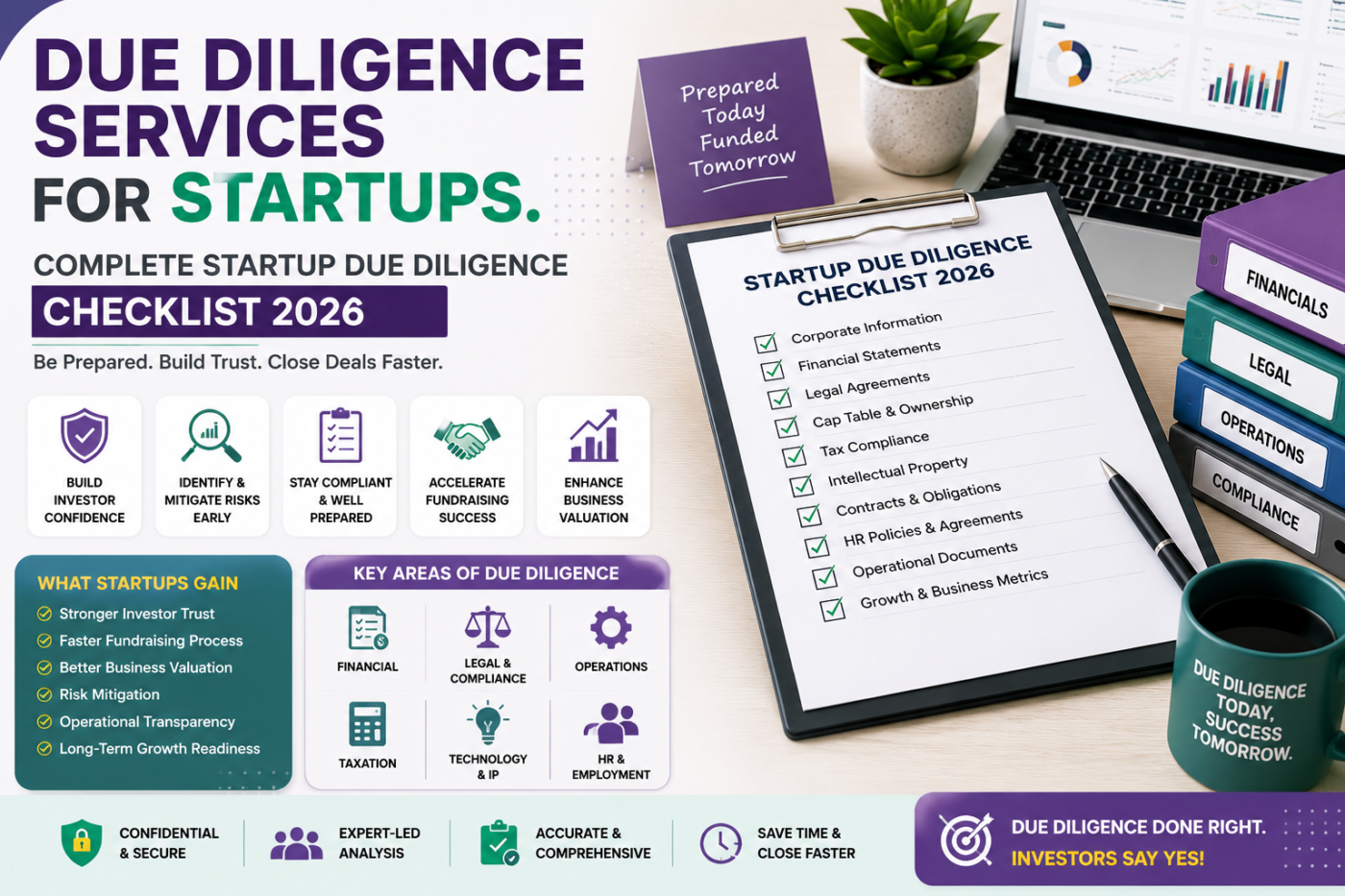
Complete Investor Due Diligence Guide for Fundraising Startups
Raising startup funding is not just about having:
- a great product,
- strong traction,
- or an impressive pitch deck.
Investors also evaluate:
- legal compliance,
- financial transparency,
- operational systems,
- business risks,
- and scalability readiness.
This is where professional due diligence services become critical.
A structured due diligence process helps startups prepare for investor scrutiny, reduce funding delays, and improve investor confidence during fundraising.
What Are Due Diligence Services?
Due diligence services help startups organize, verify, and prepare critical business information before investors make an investment decision.
A professional startup due diligence consultant helps founders prepare:
- financial records,
- legal documents,
- compliance reports,
- operational systems,
- investor documentation,
- and risk assessments.
The goal is to ensure the startup is investor-ready and prepared for fundraising discussions.
Why Investors Conduct Due Diligence
Investors are not only investing in ideas.
They are investing in:
- execution capability,
- operational maturity,
- compliance readiness,
- and long-term scalability.
During the investor verification process, investors evaluate:
- financial health,
- legal structure,
- intellectual property,
- team strength,
- customer traction,
- and operational risks.
A poorly prepared startup can lose investor confidence quickly during this stage.
Why Startups Need Due Diligence Services
Modern fundraising moves fast.
Investors expect startups to maintain:
- organized documentation,
- accurate financials,
- structured compliance systems,
- and professional investor readiness.
Without proper due diligence preparation:
- funding rounds slow down,
- investor trust reduces,
- and deal friction increases.
Professional investor due diligence services help startups stay prepared before fundraising begins.
Types of Startup Due Diligence
Financial Due Diligence
Investors carefully review startup financial performance and projections.
This includes:
- revenue analysis,
- burn rate,
- profitability,
- unit economics,
- CAC & LTV,
- financial forecasts,
- and cash flow management.
Strong financial due diligence improves valuation confidence.
Startup Legal Due Diligence
Legal verification is one of the most critical stages during fundraising.
Investors review:
- incorporation documents,
- founder agreements,
- contracts,
- intellectual property,
- compliance filings,
- and shareholder structures.
Proper startup legal due diligence reduces investment risks significantly.
Operational Due Diligence
Investors evaluate operational maturity and execution capability.
This includes:
- workflows,
- SOPs,
- internal systems,
- scalability,
- vendor management,
- and risk controls.
Commercial Due Diligence
Investors analyze market opportunity and growth potential.
This includes:
- customer acquisition,
- retention,
- market size,
- competition,
- and revenue scalability.
Complete Startup Due Diligence Checklist
Company & Incorporation Documents
Important documents include:
- Certificate of Incorporation
- PAN & GST Registration
- MOA & AOA
- Startup India Registration
- MSME Registration
- Founder Agreements
- Cap Table
- Shareholding Structure
Financial Documents
Required financial records include:
- Profit & Loss Statements
- Balance Sheets
- Cash Flow Statements
- Tax Returns
- GST Filings
- Revenue Reports
- Financial Projections
- Burn Rate Analysis
- Unit Economics
Legal & Compliance Documents
A proper startup compliance review should include:
- Vendor Agreements
- Client Contracts
- Employment Agreements
- NDAs
- Privacy Policies
- Terms & Conditions
- Trademark Registrations
- Regulatory Licenses
- Compliance Filings
Product & Technology Documents
Technology startups should prepare:
- Product Roadmaps
- Technical Architecture
- API Documentation
- Cybersecurity Policies
- Hosting Infrastructure Details
- Source Code Ownership Documents
Sales & Marketing Documents
Investors verify traction and growth capability through:
- Revenue Dashboards
- Customer Metrics
- Marketing Reports
- Sales Funnel Data
- Churn Analysis
- Retention Reports
HR & Team Documents
Required HR documents include:
- Founder Profiles
- Employee Agreements
- Organizational Structure
- ESOP Policies
- Payroll Documentation
- Hiring Plans
Startup Risk Assessment During Due Diligence
One major objective of due diligence is identifying business risks.
A professional startup risk assessment evaluates:
- legal risks,
- financial inconsistencies,
- operational inefficiencies,
- compliance gaps,
- and scalability challenges.
Reducing these risks improves investor confidence significantly.
Most Common Due Diligence Mistakes Startups Make
Poor Financial Reporting
Messy financials immediately reduce investor trust.
Missing Legal Agreements
Many startups lack:
- founder agreements,
- IP ownership documents,
- and structured contracts.
This creates major investment concerns.
Weak Data Room Organization
Investors expect:
- categorized folders,
- structured documentation,
- and quick access to information.
Disorganized documentation slows down fundraising.
Unrealistic Financial Projections
Investors carefully test:
- revenue assumptions,
- burn rates,
- and scalability logic.
Unrealistic numbers reduce credibility.
Benefits of Professional Investor Due Diligence Services
Well-prepared startups:
- raise funding faster,
- improve investor trust,
- reduce deal friction,
- and strengthen valuation confidence.
Professional due diligence preparation demonstrates:
- operational maturity,
- founder seriousness,
- and fundraising readiness.
Startup Data Room Best Practices
A structured data room improves investor experience significantly.
Recommended Folder Structure
Folder 1 — Company Documents
Folder 2 — Financial Documents
Folder 3 — Legal & Compliance
Folder 4 — Product & Technology
Folder 5 — Sales & Marketing
Folder 6 — HR & Team Documents
Folder 7 — Investor & Fundraising Documents
A clean structure simplifies the entire fundraising process.
Why Startups Choose The Startup Lab
The Startup Lab helps startups build investor-ready fundraising infrastructure including:
- Due Diligence Services
- Startup Data Room Setup
- Financial Models
- Startup Valuation Reports
- Pitch Deck Services
- Investor Readiness Consulting
The Startup Lab works with:
- founders,
- early-stage startups,
- growth-stage businesses,
- startup accelerators,
- and fundraising teams.
Future of Startup Due Diligence in 2026
Modern investors now evaluate:
- operational efficiency,
- AI readiness,
- data security,
- compliance maturity,
- and scalable financial systems
faster than ever before.
As fundraising becomes more competitive, investor-ready documentation systems are becoming essential startup infrastructure.
FAQs
What are due diligence services for startups?
Due diligence services help startups prepare financial, legal, operational, and compliance documentation before fundraising.
Why do investors conduct startup due diligence?
Investors conduct due diligence to verify risks, scalability, financial health, compliance, and founder credibility before investing.
What documents are required during startup due diligence?
Important documents include:
- incorporation documents,
- financial statements,
- contracts,
- cap tables,
- legal agreements,
- and compliance filings.
What is startup legal due diligence?
Startup legal due diligence involves verifying legal structure, contracts, intellectual property, and compliance records before investment.
How long does the startup due diligence process take?
Depending on startup stage and complexity, due diligence can take from a few weeks to several months.